

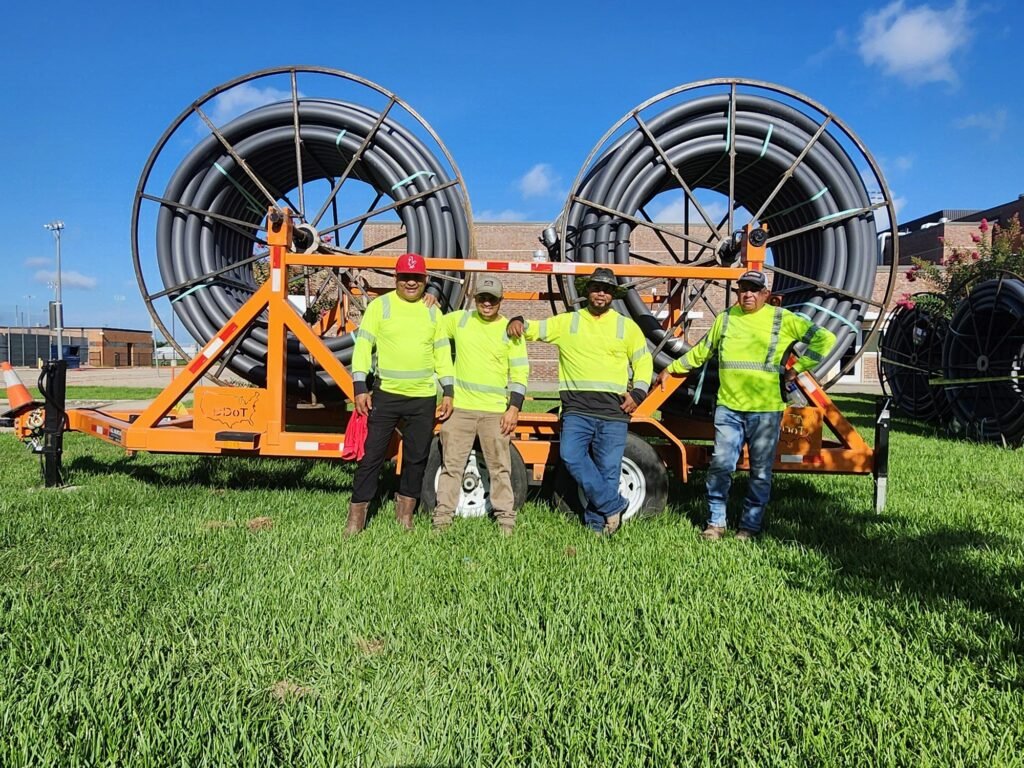
This project showcases the preparation that goes into a professional Underground Electrical Conduit Installation before directional boring begins.
July 2026
Every successful underground electrical conduit installation begins long before the first bore is drilled.
Careful planning including previously prepared architectural drawings, material staging, and having the right equipment on site allow our crews to complete projects safely, efficiently, and with minimal disruption to the surrounding area.
These photos were taken as our DDOT crew prepared for an upcoming underground electrical conduit installation project in the Houston area.
Staging the Materials
One of the first priorities is positioning the conduit where it can be safely deployed once boring begins.
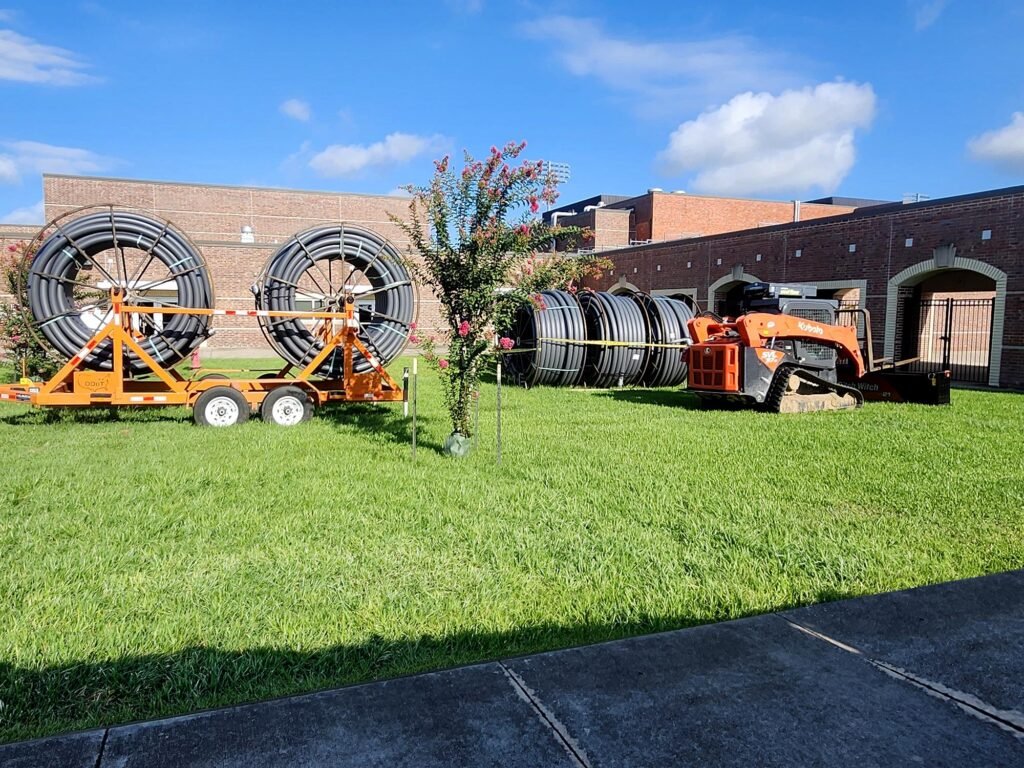
The large steel reels shown in these photos contain high-density polyethylene (HDPE) conduit, which will eventually protect underground electrical distribution cables. HDPE conduit is commonly used because it is durable, flexible, corrosion resistant, and well suited for long underground installations using Horizontal Directional Drilling (HDD).
Each reel contains long continuous lengths of conduit, reducing the number of underground joints while improving the long-term reliability of the finished installation.
Specialized Equipment Makes the Difference
Preparing an underground electrical project requires more than simply delivering materials.
Our crew uses specialized equipment designed specifically for handling heavy conduit safely and efficiently, including:
- Horizontal boring machine
- Dual-reel HDPE conduit trailers
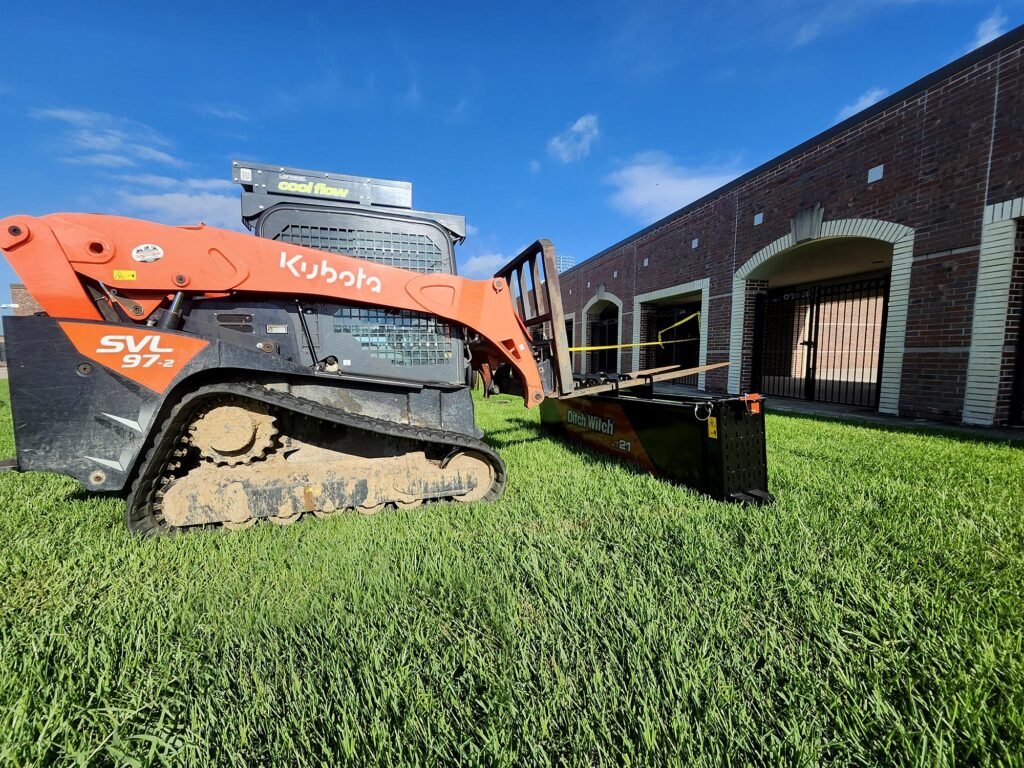
- Kubota SVL97-2 compact track loaders
- Ditch Witch conduit handling attachments
- Material handling pallet forks
Together, this equipment allows our crews to unload, transport, stage, and position conduit exactly where it will be needed before installation begins.
Safety and Efficiency Before Boring Begins
Although these photos don’t show the actual directional drill, they capture one of the most important phases of every project.
Proper staging helps our crews:
- Reduce unnecessary material handling
- Improve jobsite safety
- Keep installations moving efficiently
- Minimize delays once boring operations begin
Staging HDPE Conduit for Underground Installation
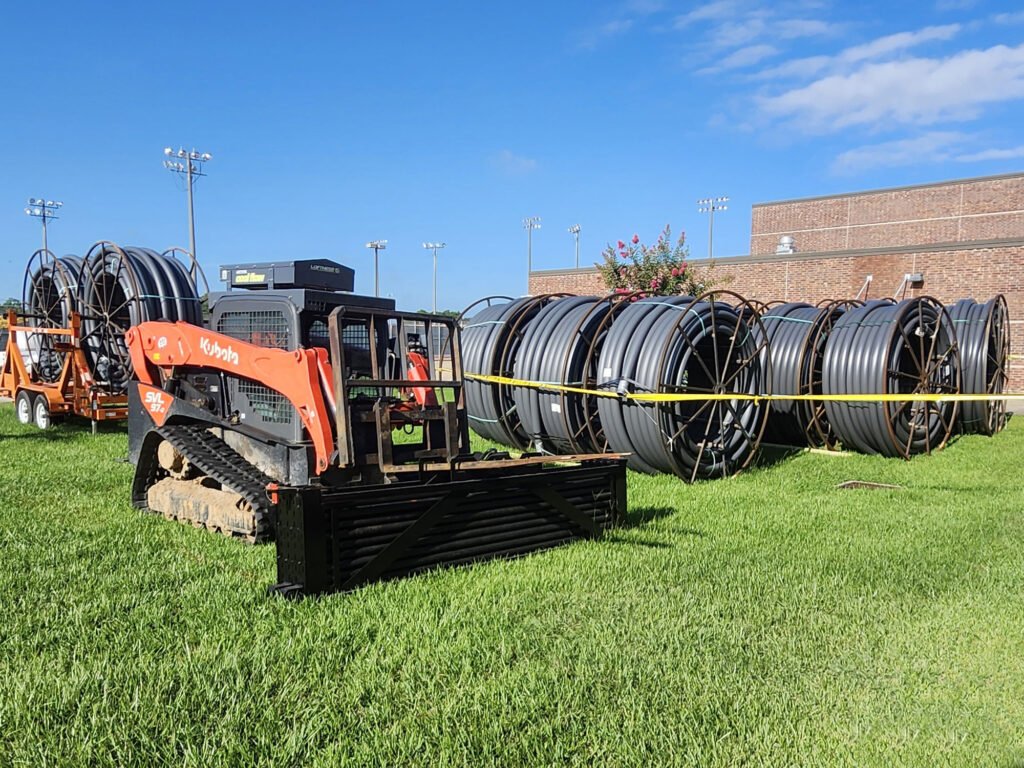
Before any conduit goes in the ground, we build out a dedicated staging area on or adjacent to the project site. Large steel storage reels of HDPE electrical conduit are positioned so they can be quickly loaded onto dual-reel trailers or fed toward trenching and horizontal directional drilling (HDD) equipment without unnecessary handling.
These HDPE conduits will ultimately protect underground electrical distribution cables, fiber-optic lines, and telecommunications infrastructure throughout the site. By staging multiple reels in advance, our crews can swap out depleted reels in minutes and keep installation moving without extended downtime.
Dual-Reel HDPE Conduit Trailers in Action
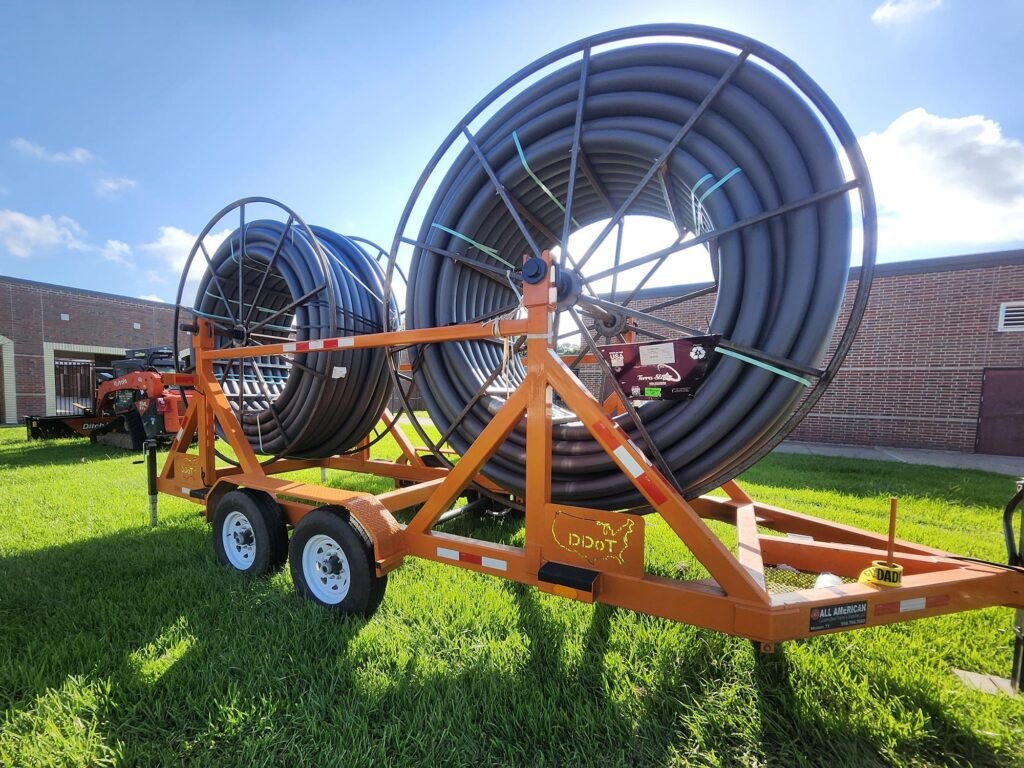
The orange dual-reel conduit trailers are the backbone of our conduit deployment system on this Houston project. Each trailer is purpose-built to transport and unspool continuous lengths of HDPE conduit, with rotating reels that allow material to be smoothly paid out as trenchers or HDD rigs advance along the alignment.
For underground electrical, fiber-optic, and telecom work, these trailers let us pull long, continuous runs of conduit with fewer joints, which improves reliability and reduces potential failure points in the finished system. On congested sites, the compact footprint of the dual-reel trailers also makes it easier to maneuver around other trades, traffic control, and existing utilities.
Compact Track Loader + Ditch Witch Attachment: Safe Conduit Handling
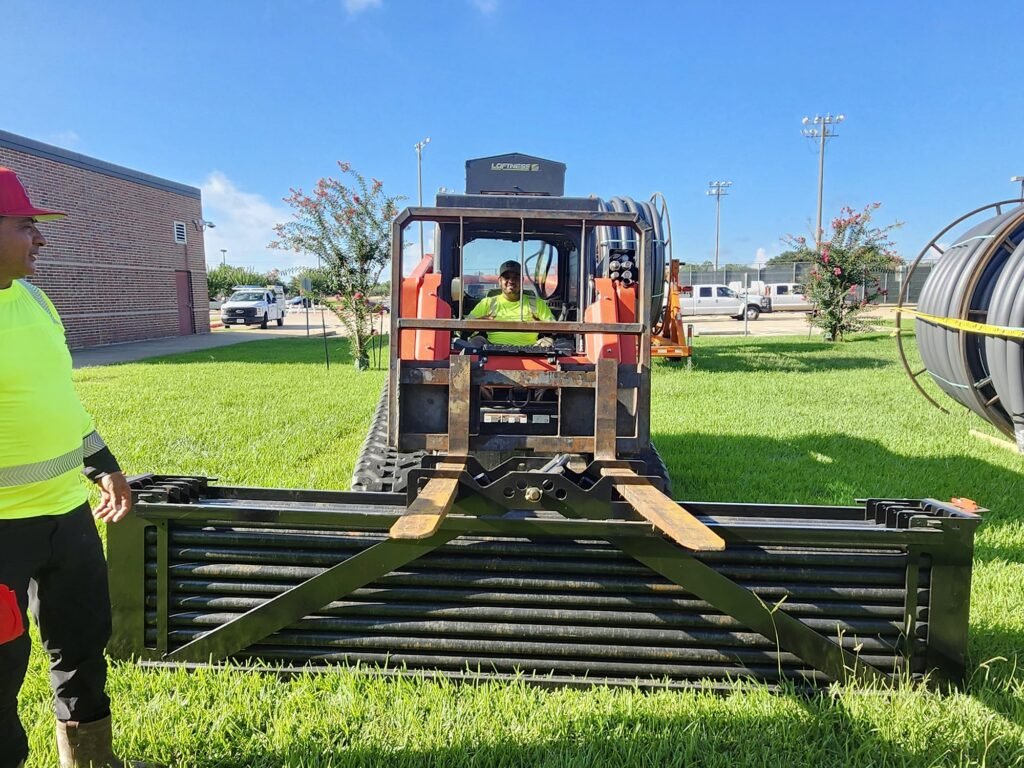
A Kubota SVL97-2 compact track loader plays a central role in how we handle heavy materials on this project. Equipped with pallet forks and a Ditch Witch pipe/conduit-handling attachment, the CTL can lift and carry long bundles or full reels of HDPE conduit across soft, muddy, or uneven ground where wheeled equipment struggles.
The Ditch Witch attachment is specifically designed to pick up, support, and position conduit bundles with minimal manual lifting by the crew. This reduces strain on field personnel, helps prevent material damage, and speeds up staging as reels are moved from the storage area to the active installation zone.
Building a Complete Conduit Deployment System
When you look at the full scene—dual-reel trailer, multiple storage reels, compact track loader, and conduit-handling attachment—you’re seeing a complete conduit deployment system designed around underground utility work. Each piece of equipment has a dedicated role: trailers handle transport and payout, the CTL handles movement and positioning, and the reels protect conduit and keep inventory organized.
On this Houston project, our system allowed our crews to continuously feed conduit into HDD, trenching, or plow operations while maintaining a clean, safe staging area. With materials pre-positioned and equipment matched to the task, we can focus on quality installation, utility coordination, and meeting the project’s schedule milestones.
Why HDPE Conduit and Proper Staging Matter
The large black and gray HDPE conduit reels shown in these photos aren’t just jobsite scenery. They’re the backbone of long-term, reliable underground infrastructure. HDPE conduit is flexible, corrosion-resistant, and ideal for long, continuous runs that follow curved HDD paths or winding trench routes around existing utilities.
By staging conduit on heavy-duty steel reels and purpose-built trailers, we prevent kinks, flattening, or damage during handling. Once installed, these conduits protect underground power, fiber, and communications lines from physical damage and moisture, supporting reliable operation for years after construction wraps up.
Results for This Houston Underground Electrical Project
For this Houston underground electrical conduit installation, the combination of HDPE conduit reels, dual-reel trailers, and compact track loader support helped our team: Maintain continuous conduit deployment with minimal downtime between reels.
- Reduce manual lifting and improve crew safety through dedicated conduit-handling attachments.
- Keep the staging area organized so HDD and trenching crews always had material ready when they were.
Our approach is repeatable across commercial, municipal, and utility infrastructure projects where reliable underground power and communications are critical.
At DDOT, we combine the right people with the right equipment to keep underground electrical and communications projects moving safely, efficiently, and on schedule.
Need underground electrical conduit installed for your next project?
Learn more about our Underground Electrical Conduit Installation services or contact DDOT to discuss your upcoming commercial, municipal, or utility infrastructure project